CPSH Research Award Recipients Announced
November 25, 2025
The Center for Planetary Systems Habitability is proud to announce the 2025-2026 Research Fellows. These exemplary students will continue research aligned with the Center’s mission. Learn more about Medha, Sven, and Luo’s research below.

Medha Prakash, “Episode I, the Phantom Crater: Using Mineralogy to Map Hydrothermal Processes in Rochechouart Impact Structure”
Impact-induced hydrothermal systems are potentially pivotal forces in facilitating the rebound of life after a catastrophe and perhaps the origins of life itself. Understanding how target environment, namely differences in rock type and the final structure of the crater affects the overall evolution of these systems can be understood on an extremely small scale by examining the minerals produced by alteration processes in these systems. These alteration products can be examined by reflectance spectroscopy in visible and infrared wavelengths to understand their composition and spatial relations to one another. I am using this methodology on a variety of scales on cores drilled in Rochechouart and Chicxulub impact structures to understand the physical and chemical processes governing this alteration.

Sven Kiefer, “How Do Meteoritic Impacts Shape Exoplanet Clouds?”
With the discovery of thousands of exoplanets, we face the challenge of understanding the role of meteoritic impacts across a wide range of planetary environments. To determine under which conditions impacts cause a significant change to the atmospheric structure, we investigate the connection between impacts and cloud formation. Through this work, we will be able to determine which exoplanets are most affected by meteorites, and assess the observability of small and large impacts.
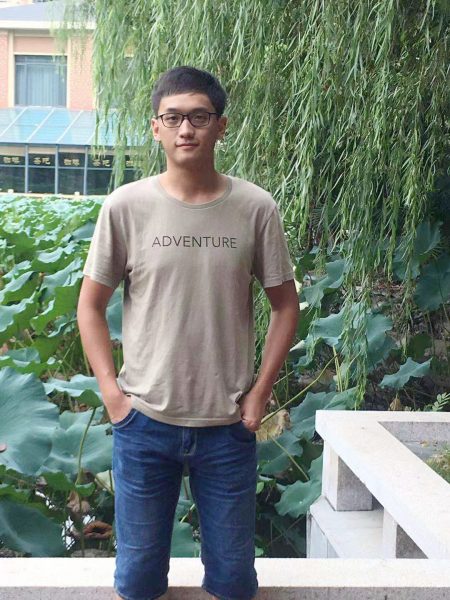
Luo Li, “Understanding the Role of the Molten Silicate Layer on Martian Habitability”
Postdoc fellow Luo Li will conduct ultrafast laser pump-probe spectroscopic measurements of Martian materials at high pressure-temperature conditions. These results will be used by collaborating geodynamicists in numerical simulation to allow us to predict the dynamic evolution of Martian interior and explore potential factors of habitability (e.g. the impact of magnetic field, formation of liquid water and suitable atmosphere) and life-supporting environment. The project will allow him to build a professional career in planetary sciences, seek external research funding opportunities such as NASA Solar System Sciences Program, and establish collaborations with Texas planetary scientists.