CPSH Seminar Series: Stephen Kane, University of California Riverside
March 12, 2026
March 23, 2026 at 1:00pm CT
Location: Classroom 15.216B, Physics, Math and Astronomy Bldg.
UT Austin, Department of Astronomy
2515 Speedway, Stop C1400
Austin, Texas 78712-1205
Online: To join online contact Brandon Jones.
Get seminar links sent straight to your inbox, subscribe to our seminar mailing list.
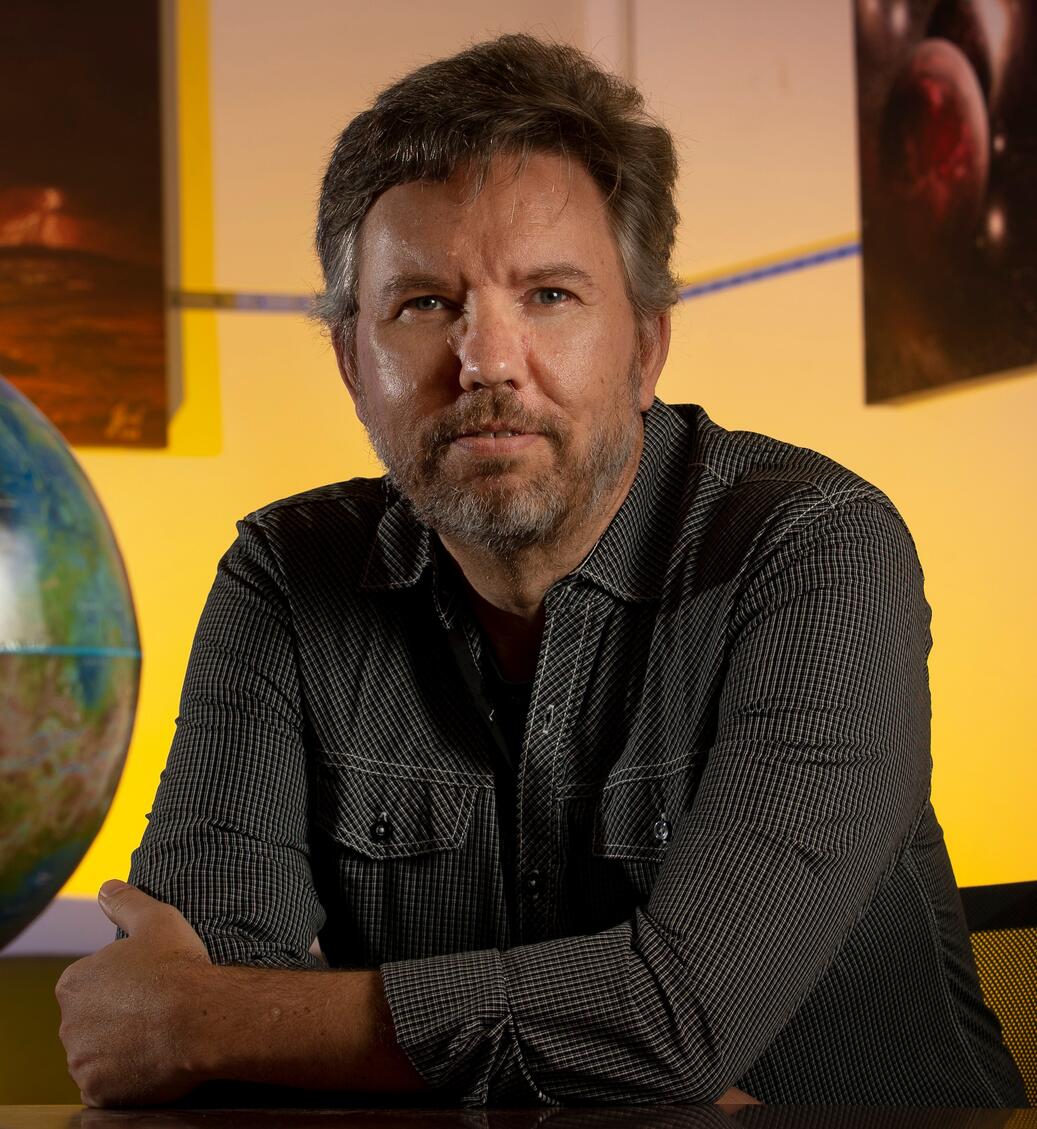
Speaker: Stephen Kane, Professor of Planetary Astrophysics, University of California Riverside
Host: Bill Cochran
Title: Hic Sunt Dracones: Uncovering Dynamical Perturbers Within the Habitable Zone
Abstract: A key component of characterizing multi-planet exosystems is testing the orbital stability based on the observed properties. Orbital dynamics is also a critically important component of testing habitability scenarios for terrestrial planets within the system, and can play a major role in driving the evolution of terrestrial planet climates. In this presentation, I will describe recent work regarding the effects of orbital dynamics on planetary habitability, focusing on dynamical limits on Habitable Zone (HZ) terrestrial planets. I will present our simulation results that severely impact 11 of 30 known systems in the Habitable Worlds Observatory (HWO) preliminary target list due to orbital instability within the HZ. I will further present the distribution of uncertainties on planetary masses and semi-major axes for 1062 confirmed planets, showing the dependence of these uncertainties on stellar mass and orbital period, and discuss the effects of these uncertainties on dynamical analyses and the locations of mean motion resonance. Finally, I will show the expected radial velocity (RV) semi-amplitude for a Neptune-mass planet in the middle of the HZ for each of the proposed HWO target stars. Our work provides specific recommendations regarding stellar characterization and RV survey strategies that work toward the detection of presently unseen perturbers within the HZ.
Biography: Stephen Kane is a Professor of Planetary Astrophysics at the University of California, Riverside. His work covers a broad range of topics and he has discovered hundreds of planets orbiting other stars. His research focuses on the topic of planetary habitability, the habitable zone of planetary systems, and the study of why Venus and Earth underwent divergent evolutions. He has published hundreds of peer-reviewed scientific papers as well as several books on the topic of exoplanets and habitability. He is an extremely active participant in both the astrophysics and planetary science communities, and leads efforts toward bringing the two communities together with a common goal of characterizing planetary processes through leveraging Solar System data in the analysis and interpretation of exoplanet observations..