CPSH Seminar Series: Sukrit Ranjan, The University of Arizona
August 11, 2026
October 26, 2026 at 1:00pm CT
Location: Classroom 15.216B, Physics, Math and Astronomy Bldg.
UT Austin, Department of Astronomy
2515 Speedway, Stop C1400
Austin, Texas 78712-1205
Online: To join online contact Brandon Jones.
Get seminar links sent straight to your inbox, subscribe to our seminar mailing list.
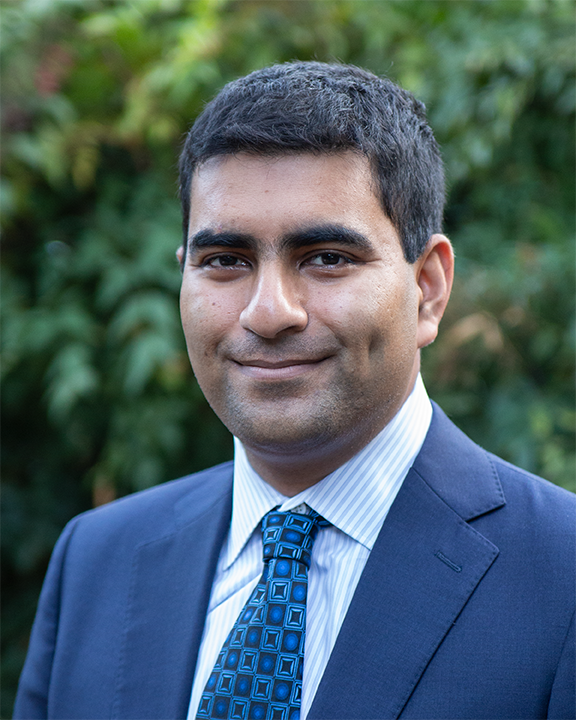
Speaker: Sukrit Ranjan, The University of Arizona
Host: Caroline Morley
Title: Towards the Abiotic Baseline: Building Planetary Context for Exoplanet Life Detection
Abstract: Exoplanet surveys have revealed temperate terrestrial exoplanets to be abundant, and current and future facilities (e.g., JWST, GMT, HWO) aim to characterize their atmospheres in search of gaseous signs of life (“biosignature gases”). The main paradigm for exoplanet life detection envisages a Bayesian approach, wherein a putative biosignature is evaluated in the context of the likelihood that the planet is suitable for the emergence and sustenance of life and of the risk of abiotic “false positives”. Implementing this paradigm requires developing theories of abiogenesis and habitability, and evaluating false positive mechanisms for putative biosignature gases and their observational discriminants. I will present modeling and laboratory efforts towards these goals, focused on (1) improving understanding of prebiotic Earth environments to iteratively refine theories of abiogenesis, (2) constraining the false positive potential for O₂ and CH₄ as biosignature gases, and (3) exploring how observations of uninhabitable worlds can constrain the diversity of planetary mantles and therefore the false positive risk from magmatic outgassing. Together, these efforts work toward an “abiotic baseline”, i.e., determining the range of atmospheric states possible on habitable planets in the absence of life.
Biography: I am a theorist and modeler focused on questions related to the origin of life on Earth and the search for life on other worlds. These questions are coupled: efforts to understand the origin of life on Earth helps guide our search for it elsewhere in the cosmos, while observations of other planets help us test our theories of the prebiotic environment and of abiogenesis. To understand abiogenesis, I work to constraining the palette of environmental conditions from which life arose on Earth, to constrain and guide experimental studies of the origin of life. To search for life elsewhere, I work to determine observational tests by which life on other worlds may be remotely discriminated. In collaboration with my experimental colleagues, I work to obtain the critical measurements of fundamental physico-chemical parameters required to build robust models in support of both goals.
I completed my PhD in Astronomy & Astrophysics at Harvard University, followed by a SCOL postdoctoral fellowship at MIT EAPS and a CIERA postdoctoral fellowship at Northwestern. I completed my undergraduate work at MIT, where I majored in physics and minored in astronomy and history.